




We believe the high yield market may no longer be the higher risk market of yesteryear. It may be worth considering as an important ‘missing link’ between investment grade corporates and higher risk markets like private credit
Five reasons high yield may be structurally less risky today
1. High yield’s credit quality has been on the rise
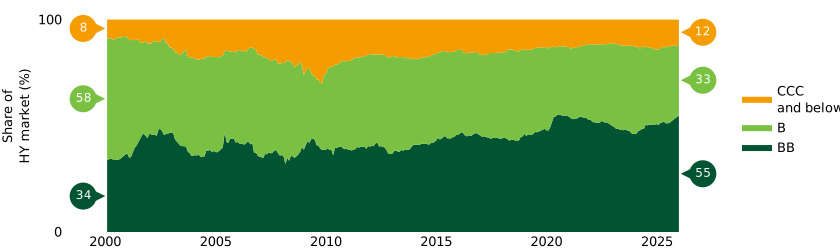
The share of the high yield market with BB credit ratings has been steadily increasing for the past 15 years, while the share of CCCs has done the opposite (Figure 1). This has been driven by more upgrades than downgrades, reflecting corporate fundamentals, the composition of issuers and the economic backdrop.
Figure 1: High yield credit ratings have been improving1
2. Highly leveraged issuers are increasingly turning to private credit for financing
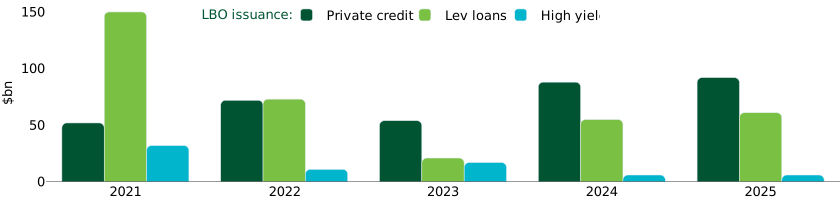
High-yield bonds (alongside leveraged loans) were historically natural funding sources for private equity leveraged buyouts (LBOs). However, highly leveraged issuers are increasingly turning to private credit for financing (see Figure 2), leaving the high-yield market increasingly composed of more traditional corporate debt.
Figure 2: LBOs have increasingly migrated to private credit markets for financing2
3. High yield’s interest rate risk has been falling
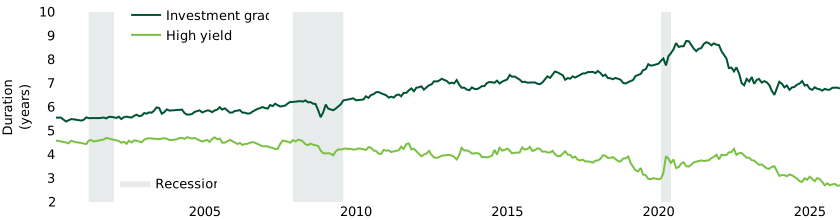
The high-yield market’s interest rate sensitivity (as measured by duration) is at a record low (Figure 3). Following the inflation surge and rate hikes in 2022, issuers have opted for shorter maturities to avoid locking in high rates and delayed refinancing pandemic-era bonds with lower coupons. Additionally, limited downgrades from investment grade to high yield has helped keep average durations low.
Figure 3: High yield interest rate sensitivity has been falling3
4. Fundamentals are strong and defaults are low
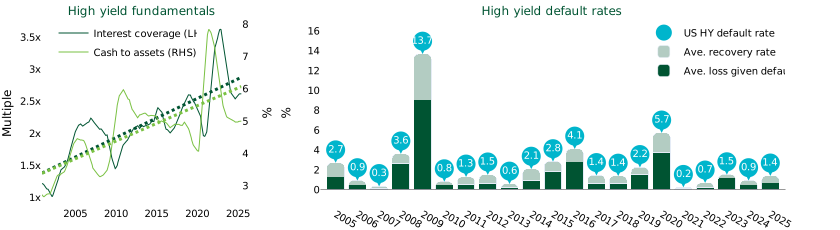
High-yield issuers appear financially stronger than in previous cycles (Figure 4, left), demonstrated by rising cash reserves and improved interest coverage ratios. This strength is reflected in losses on defaults averaging below 1% pa over the past five years (Figure 4, right).
Figure 4: High yield fundamentals have seen an improving trend and default rates have been modest4
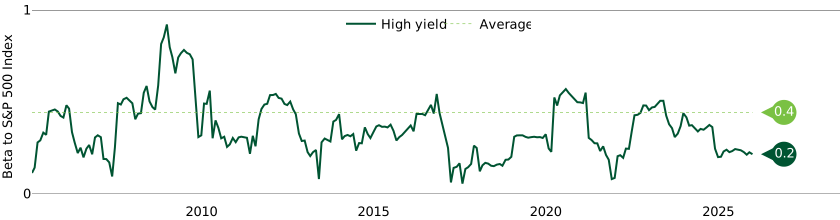
5. High yield’s beta to stocks is below its historical average
High yield has traditionally been viewed as closely correlated with equities (as measured by the S&P 500 index). However, its beta to stocks has declined in recent years, indicating that high yield may now offer some diversification benefits (Figure 5).
Figure 5: High-yield’s recent beta to equities has been lower than average3
Conclusion: Should high yield be considered a core allocation?
With improving credit quality, reduced exposure to highly leveraged issuers, low interest rate sensitivity, potentially robust fundamentals, and lower beta to equities, we believe high yield may deserve a permanent role in diversified portfolios.
For investors seeking income and diversification, high yield could be the missing link in a well-constructed strategy.


Most read
Global macro, Economics

June 2025
Global Macro Research: State of the world
Fixed income

October 2025
Time to allocate to fixed income
Fixed income, Global macro, Economics

June 2025
Global Macro Research - US exceptionalism: at a crossroads
Fixed income

August 2025