




|
“Blockchain, tokenisation, and cryptocurrencies form the basis of what may be the most important evolution in market infrastructure since SWIFT replaced the error‑prone Telex messaging system in 1977.” |
 |
Understanding the stablecoin hype
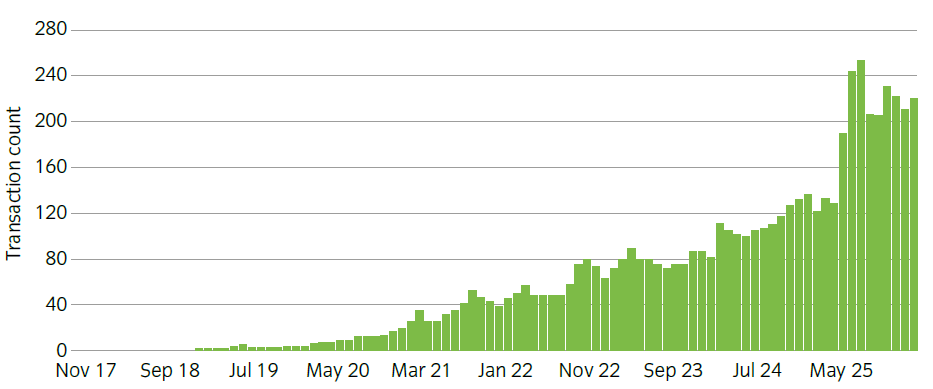
Stablecoins have grown rapidly, with market capitalisation rising by around $100bn to exceed $300bn in 2025, and some analysts projecting it could reach $4trn by 2030 – close to the current US monetary base of roughly $5trn1. Monthly transaction volumes have also accelerated, reaching 215m in January 2026 (see Figure 1), more than 60% higher than the previous year.
Given this rapid expansion, and their potential to become an additional funding channel for governments, we believe now is an opportune moment to reassess the key issues surrounding stablecoins and consider how they might influence broader financial markets.
Figure 1: Transactions in stablecoins have grown materially2
The appeal of stablecoins is clear: they offer near‑instant settlement, 24/7 global reach, programmability, transparent on‑chain auditability, and low transaction costs. As digital assets and services become increasingly integrated into global finance, stablecoins are expected to be an important part of this evolution.


