




MARKET REVIEW
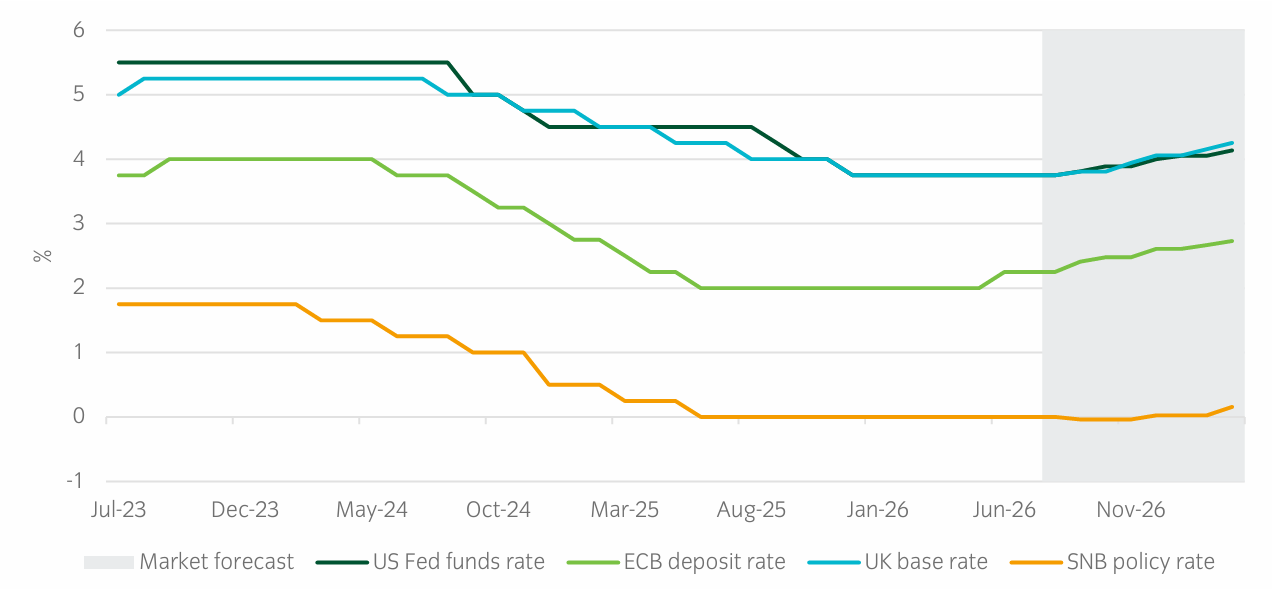
European Central Bank (ECB): The ECB Governing Council voted to maintain its key deposit rate at 2.25%, in line with expectations. Nonetheless, ECB President Christine Lagarde emphasised that the war-driven surge in energy prices has generated renewed inflation pressure, while reiterating that policy will remain data dependent. Lagarde also stated that decisions will be based on “our assessment of the inflation outlook and the risks surrounding it,” rather than following a preset rate path. Meanwhile, Eurostat reported that the annual Harmonised Index of Consumer Prices (HICP) inflation rate rose to 2.8% in June, down from May’s 3.2%, while the unemployment rate remained at 6.3% in June. GDP data showed the euro area economy rose by 0.4% quarter-on-quarter in the second quarter, up from flat growth in Q1. The ZEW Economic Sentiment Indicator rose substantially in July to 23.4, up from June’s 9.5 and well ahead of consensus estimates of 11.2. According to a preliminary estimate, the S&P Global Eurozone Composite PMI rose to 51.9 in July, up from 50.0 in June and a five-month high, comfortably exceeding market expectations of 50.3.
Swiss National Bank (SNB): The SNB did not hold a monetary policy meeting in July, having reduced its policy rate to 0% at its June assessment. However, minutes released in July indicated officials’ willingness to intervene in foreign-exchange markets if necessary to counter excessive appreciation of the Swiss franc. Manufacturing activity remained resilient at the start of the third quarter, with the procure.ch Purchasing Managers' Index (PMI) remaining in expansionary territory during July, although momentum eased somewhat from the exceptionally strong readings recorded earlier in the quarter. The KOF Economic Barometer eased again in July to 53.2, down from 54.3 in June and below market expectations but remained in expansionary territory. Inflation remained low by international standards, with year-on-year inflation falling by 0.1% to 0.5% in June, before easing again in July to 0.4% reflecting lower prices for transport, clothing and food. Meanwhile core inflation remained unchanged at 0.3%. Consumer confidence continued to lag the improvement seen in business surveys, marginally improved.
UK Bank of England (BoE): The BoE Monetary Policy Committee voted 6–3 to maintain the Base rate at 3.75%, with the three dissenting members voting for a 0.25% hike. Governor Andrew Bailey noted that disinflation is continuing, albeit at a “slow pace”, highlighting the challenge of returning inflation sustainably to the Bank’s 2% target. He added that there is still “little evidence” of second‑round effects feeding into domestic inflation and stressed that policymakers are taking a “wait-and-see” approach. In terms of data releases, the Office for National Statistics (ONS) reported that the annual Consumer Price Index (CPI) inflation rate moderated to 2.6% in June, below expectations of 2.7%. The ONS also reported that month-on-month retail sales rose by 1.0% in June (materially better than the 0.3% decline expected), meanwhile the unemployment rate remained at 4.9% in the three-month period to May (below expectations of 5.0%). Elsewhere, according to preliminary estimates, the S&P Global UK Composite PMI rose to 52.1 in July, from 49.3 in June. In political news, Andy Burnham replaced Sir Keir Starmer as Labour Party leader and UK prime minister. The early market response was an increase in gilt yields, amid concerns that a Burnham administration could pursue a more expansionary fiscal agenda.
US Federal Reserve (Fed): In the US, the Federal Open Market Committee (FOMC) voted 9–3 to maintain the target range for the federal funds rate at 3.5%–3.75%, with the three dissenting policymakers voting for a 0.25% hike. Speaking after the meeting, Fed Chair Kevin Warsh emphasised that policymakers have “no tolerance for persistently elevated inflation” and remain resolutely committed to restoring price stability. However, he did not specify how policymakers intended to achieve this, fuelling expectations of Fed rate hikes and pushing 30-year Treasury yields above 5.2%, their highest level in 19 years. According to the Bureau of Economic Analysis (BEA), the Personal Consumption Expenditures (PCE) Price Index, a measure of inflation closely watched by the Fed, rose by 3.7% year-on-year in June, down from 4.1% in May. Activity data were also firmer, with the Institute for Supply Management (ISM) Manufacturing Purchasing Managers Index (PMI) fell slightly to 53.3, down from May’s 54.0, while the ISM Services PMI fell to 54.0, down from May’s 54.5. The BEA also reported that GDP rose at an annualised rate of 1.5% in the second quarter, down from 2.1% in the first quarter. In employment data, non-farm payrolls indicated that the US economy added 57,000 jobs in June well below expectations of 129,000, and down from May’s upwardly revised 172,000. Consumer confidence improved over the month as the University of Michigan Consumer Sentiment Index rose to 55.2 in July.
Figure 1: Central bank rates history and future market pricing1
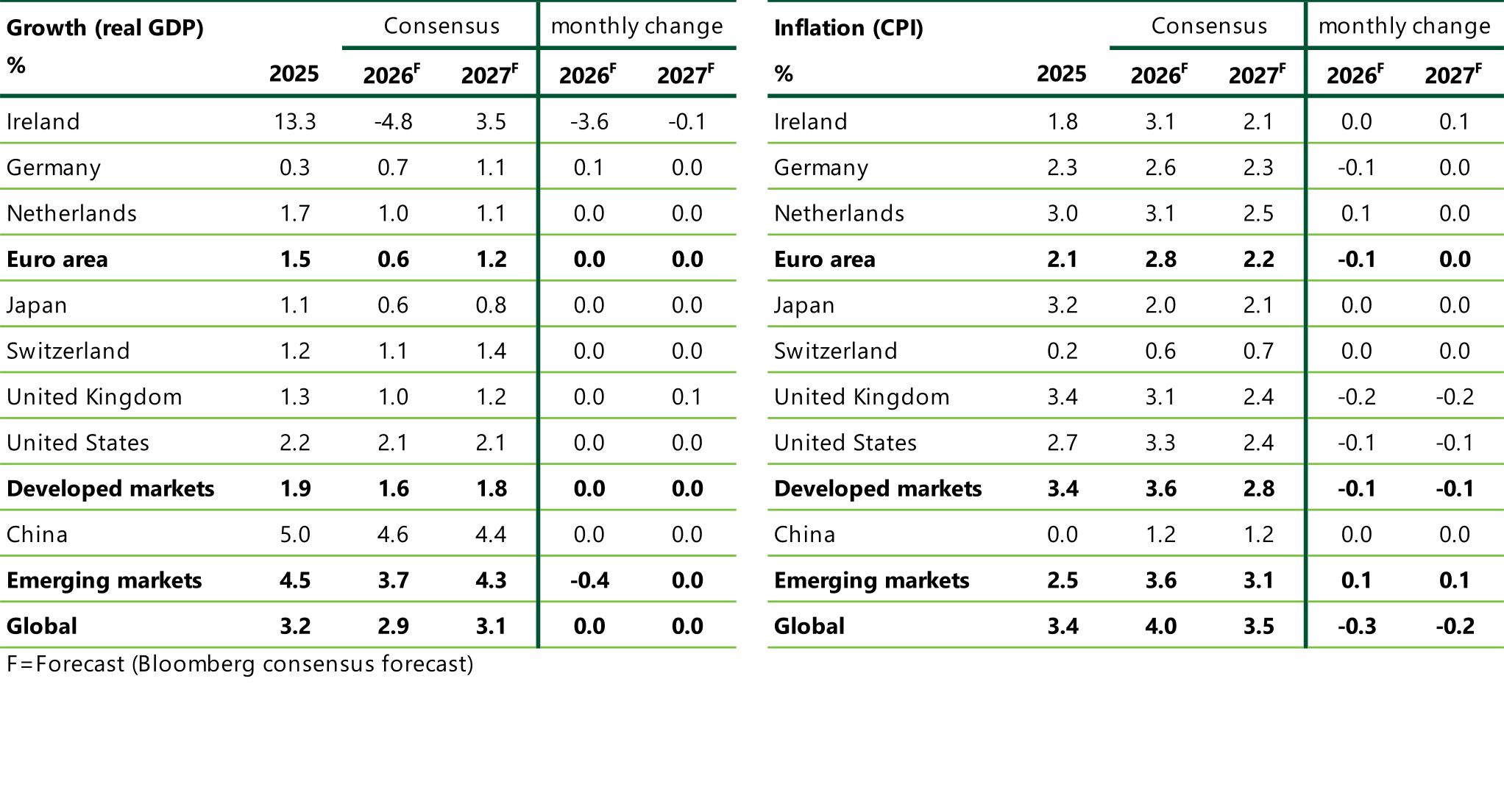
Key interest rates and global data1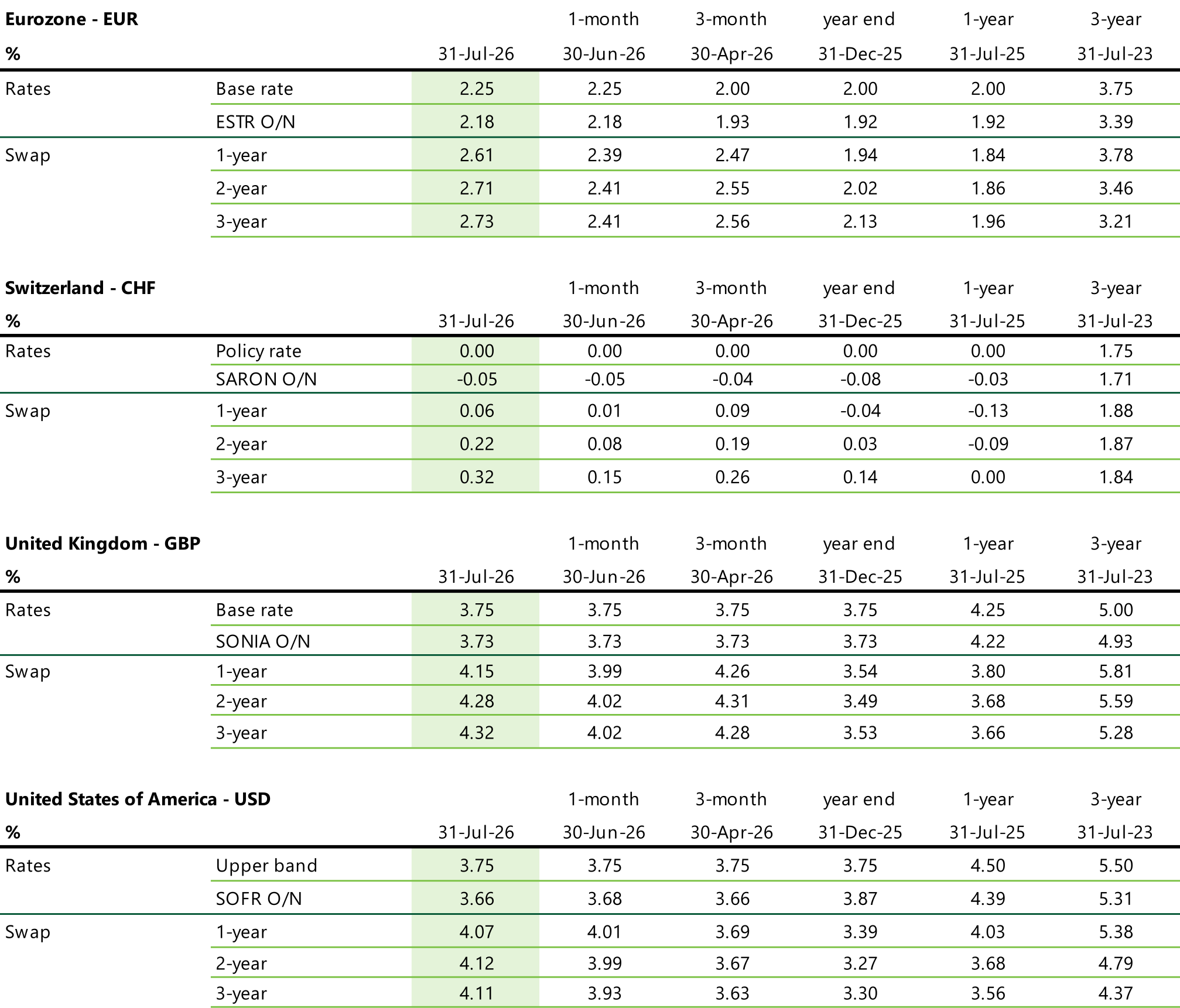


Most read
Global macro, Economics

June 2023
Global macro research: A banquet of consequences
Global macro, Currency

June 2023
Global macro research: 30 years in currency markets
Global macro, Economics

May 2023
Why central banks may struggle to solve the inflation puzzle
Global macro, External speakers

April 2023