

| Cash-heavy portfolios risk missing attractive fixed income yields without adding substantial interest-rate exposure. Short-dated credit, floating-rate credit and asset-backed securities can enhance income while helping manage duration risk and volatility. |  |
What you need to know
- Short-dated investment grade credit captures most income potential while materially reducing duration and spread sensitivity.
- Short-dated high yield focuses on near-term cash flows, improving visibility, flexibility and predictable, income-driven outcomes.
- Floating-rate credit adjusts coupons with market rates, providing low interest-rate sensitivity and resilient income profiles.
- Asset-backed securities diversify corporate credit risk with floating-rate structures and embedded protections, targeting cash-plus returns.
- Elevated policy rates and long-end volatility support allocating beyond cash while controlling duration-related risks today.
Enhancing yield while managing duration risk
Policy rates across developed markets remain attractive, while longer-dated sovereign volatility increases the appeal of income strategies with limited duration exposure. Stepping out of cash into short-dated bonds can lock in yields without substantial interest-rate sensitivity. Allocations to short-dated global credit, floating-rate credit and asset-backed securities capture income with outcomes anchored in contractual cash flows.
Policy expectations shift toward a more restrictive regime
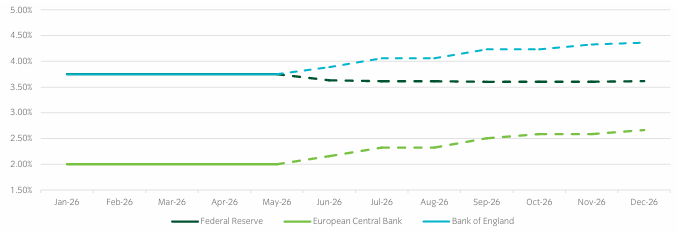
Markets have repriced trajectories for the Federal Reserve, Bank of England and European Central Bank as inflation risks persist. Energy disruptions and elevated prices increase upside inflation risks, raising the prospect of extended pauses or further tightening.
Figure 1: Elevated policy rates support income opportunities in short-dated credit.
How contractual income can aid portfolio resilience
Shorter-dated and floating-rate exposures are less sensitive to movements in government yields. Returns are driven more by contractual income and the credit premia earned, rather than capital gains. Shorter maturities also enable faster reinvestment at prevailing yields. Together, these features reduce the persistence of losses and help manage duration and spread volatility. Pull-to-par supports recovery as bonds near maturity.
Four ways to potentially deliver attractive income with limited duration risk
Investors can target income with controlled duration through four approaches that emphasise short maturities, floating coupons and diversified, secured cash flows.
1. Global short-dated investment grade credit: resilient income
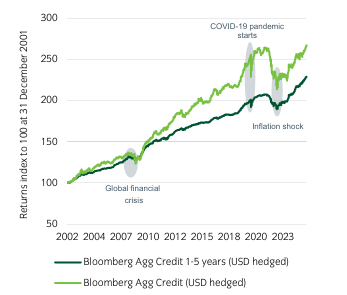
Short-dated IG credit delivers high-quality income at a yield level close to the broader global IG market, with materially lower duration. Historical volatility has been lower than all-maturity credit, and drawdowns have been shallower during crises. The shorter maturity profile reduces sensitivity to rates and spreads, while pull-to-par and frequent reinvestment support more stable, contractual return profiles.
Figure 2: Short-dated IG typically exhibits lower volatility than all-maturity credit
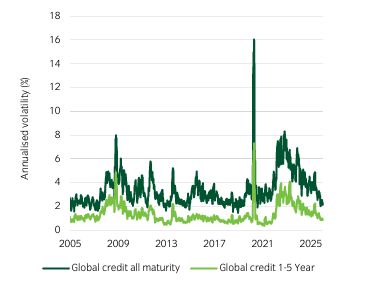
Figure 3: Drawdowns have been shallower for short-dated IG during major dislocations
2. Global short-dated high yield: focus on visible cash flows
A global short-dated high yield approach concentrates on bonds maturing within two years to prioritise cash flows. Most returns come from coupons, improving predictability and reducing reliance on price gains. Short maturities increase flexibility to adapt to changing rates. The market’s quality has improved, with a greater share of BB-rated issuance, further supporting a disciplined, income-focused allocation.
3. Floating-rate credit: income that adapts
Floating-rate instruments reset coupons with market rates, delivering very low interest-rate sensitivity and more stable prices. If rates stay elevated or rise, income adjusts accordingly. These exposures offer a practical complement for investors moving beyond cash while maintaining a defensive profile against rate changes, with security selection remaining critical.
4. Asset-backed securities: structured, floating-rate income
ABS diversify away from traditional corporate credit, often with floating-rate coupons and structural protections. Cash flows are backed by granular pools of secured loans, while subordination and other features defend senior tranches. ABS have shown low-to-moderate correlation with government bonds, helping target cash-plus returns with controlled interest-rate and credit risk.
Conclusion
Income-driven strategies less reliant on duration can help investors move selectively beyond cash while policy uncertainty persists. Combining short-dated and floating-rate credit with ABS can enhance carry, manage rate and spread volatility, and preserve reinvestment flexibility across evolving market conditions.