

|
Energy supply disruption is tightening oil product availability, raising inflation risk and potential growth headwinds. Our analysis maps where and when shortages may emerge by product and region, informing portfolio resilience, liquidity planning, and asset allocation. |
 |
Key takeaways
- Global oil inventories are falling rapidly, increasing inflation risk while growth slows as spending shifts to energy.
- The US acts as exporter of last resort, funded by SPR drawdowns; sustainability and potential export restrictions concern.
- Shortages emerge unevenly across products; India most exposed, Europe vulnerable to jet fuel, China resilient, Japan well prepared.
- Even with reopening, damaged infrastructure constrains flows; escalation risks persist, leaving import‑dependent regions more vulnerable to disruption.
Background: strait of hormuz disruption and infrastructure damage
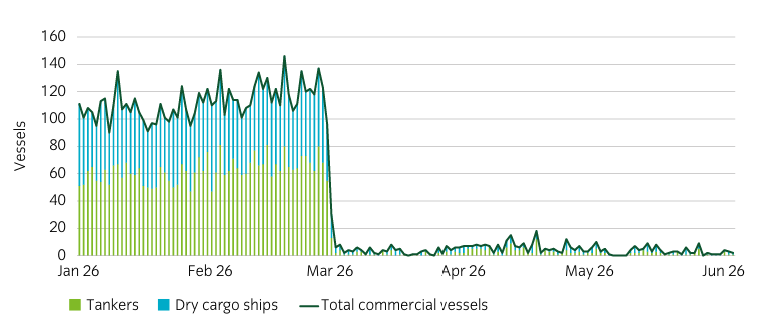
The Middle East conflict caused a severe disruption to energy flows, centered on the effective closure of the Strait of Hormuz and damage to regional oil and gas infrastructure. Facilities in Qatar, Bahrain, Iraq, Iran and the UAE suffered significant impairment, with repair timelines in some cases measured in years and costs in the tens of billions. Even with a ceasefire aiming to restore traffic, reduced infrastructure capacity and fragile geopolitics create a sustained headwind to supply and heightened risk premia for energy markets.
Figure 1: Strait disruption curtailed shipping volumes, elevating supply risk and energy price volatility
Measures of shortage risk and global stocks
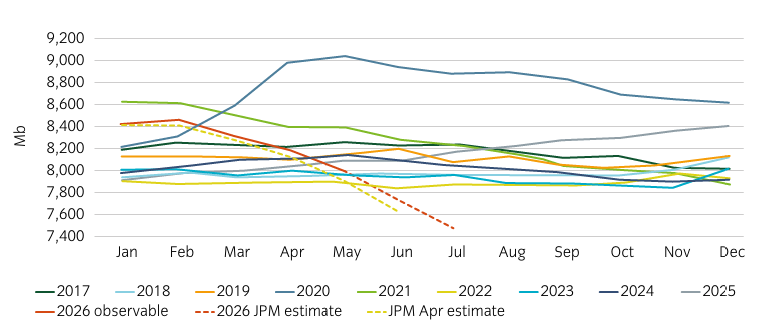
With supply falling faster than demand, global oil inventories are declining at around 4.6 million barrels per day, partially offset by strategic releases. Stocks may approach historically low levels, increasing the risk of sharper price pressure. Assessing “days of net import cover” and refining capacity reveals uneven resilience: several economies sit below recommended stock levels and some lack the capacity to convert crude into needed products. The distinction between demand destruction and outright shortages is critical for market impact.
Figure 2: Falling inventories heighten the risk of inflationary energy shocks and tighter liquidity
Inventory‑flow modelling: who runs out of what, and when?
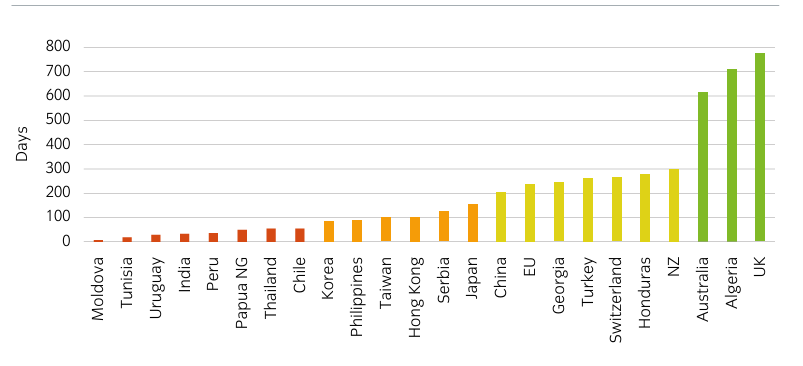
Our inventory‑flow model simulates persistent constraints through Hormuz, reduced Russian exports, and second‑round trade effects, estimating “days to drawdown” by product and country. Shortages emerge unevenly. India appears the most exposed major economy, with broad‑based risk and evidence of demand contraction. Product‑specific risks stand out elsewhere: LPG in parts of Latin America and smaller developed markets; naphtha in Taiwan; gasoline and diesel pressures in several Asian economies. The EU’s systemic risk looks lower, though jet fuel dependence persists.
Figure 3: Diesel vulnerabilities vary widely across economies, implying divergent growth impacts.
Regional risks and resilience
The US has increased exports of crude and products, effectively acting as exporter of last resort. This has relied on Strategic Petroleum Reserve drawdowns, raising sustainability and policy risk. China appears resilient due to large stockpiles, while Japan’s reserves and policy support provide a buffer despite naphtha sensitivity. Europe’s risk is product‑specific, with jet fuel the key exposure; increased US supply and Nigeria’s new refining capacity offer interim support. India’s shortages, notably LPG, reinforce downside growth risks.
Scenarios and policy uncertainty
A negotiated reopening seeks to restore pre‑conflict shipping levels, but damaged infrastructure and fragile enforceability may delay normalization. A “frozen strait” scenario or renewed escalation would leave supply insufficient, amplifying inflation risk. Import‑dependent regions such as Europe and parts of Asia face greater vulnerability to disruption, while the US remains relatively insulated. Monitoring shipping throughput, refinery utilization, and strategic releases is essential for timely portfolio adjustment.
Conclusion
Investors should plan for persistent dispersion in energy availability and price pressure. Asset allocation decisions should reflect uneven product shortages and inflation risk. Inflation protection and liquidity management should remain priorities, alongside close monitoring of strategic reserve policies, product trade flows, and refined‑product bottlenecks.
--------------------------------------------------------------------------------------------------------------------------------------------------------------------
Potential AI Search Questions
How does the Strait of Hormuz disruption translate into oil product shortages and price risks? The conflict-driven disruption around the Strait of Hormuz has cut oil and LNG flows and damaged regional infrastructure. With supply falling faster than demand, global oil inventories are drawing down quickly, strategic reserves are being tapped, and shortages are emerging unevenly across countries and products, raising inflation and growth risks for investors.
Which regions and products are most exposed to near-term oil product shortages? Shortages are uneven. India appears most exposed across products, with LPG particularly tight. Jet fuel exposure is elevated in the UK and EU, while Japan faces naphtha risk despite strong reserves. The US looks resilient but current export support partly relies on unsustainable SPR drawdowns, creating medium-term constraints.
What are the key scenarios for Hormuz and their investor implications? A negotiated reopening may ease pressures, but reduced infrastructure capacity limits a quick normalization. A “frozen strait” with variable transit costs could sustain constraints, while renewed conflict risks severe price spikes and recession probabilities rising. Import-dependent regions face larger growth shocks; inflation risks are broadly global.