




Summary:
- The 2026 midterms could impact municipal credits through fiscal choices, tax measures and data center and other policies.
- Policies around recurring tax revenues, spending obligations and infrastructure cost allocations could determine the outcome.
- The most appealing issuer-by-issuer opportunities may offer near-term budget resilience and lower longer-term structural risk.
Federal gridlock may reduce threats to the municipal bonds’ tax advantages
Although control of both chambers remains uncertain, polling currently points to a potentially divided Congress. Investors often welcome such gridlock, viewing it as a source of policy stability.
For municipal investors, it potentially reduces the risk of changes to municipal bonds’ federal tax advantages, which had been a consideration of some deficit hawks and tax reformers during the construction of the 2025 budget reconciliation bill.
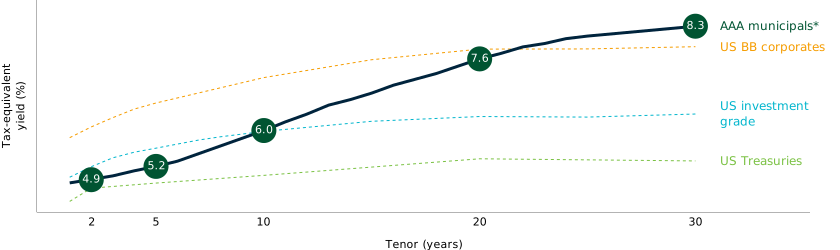
Reduced uncertainty over the tax exemption could help sustain retail demand and support municipal bonds, particularly as longer-dated AAA debt offers tax-equivalent yields competitive with high yield corporates for investors in the highest tax bracket (Figure 1).
Figure 1: Tax-equivalent yields provide market context1
Unified state control can help address fiscal pressures
While federal gridlock can reduce the prospect of major policy changes, divided government at the state level can make it harder to address fiscal problems.
Research indicates divided government increases risks of delayed state budgets2. Common party control of the governorship and legislature can reduce political obstacles to revenue and spending decisions.
This can become particularly important where states already face structural budget imbalances. Disagreement over how to close a budget gap can potentially delay structural adjustments and increase reliance on temporary measures. Unified control can offer a clearer path to difficult revenue or spending decisions. It will not guarantee sound budgets but can reduce execution risks.
A “trifecta” is when a single party controls the state governorship as well as the state senate and house/assembly. There are 14 potential states where midterms could make or break unified party control (Figure 2). Gaining it could make adjustments easier, losing it could increase the risk of gridlock.
Figure 2: States at risk of gaining trifectas may present opportunities3
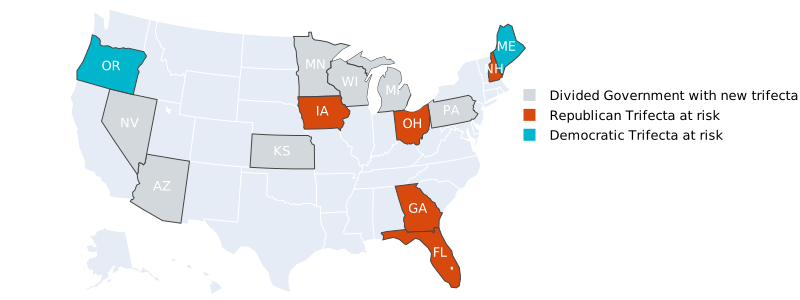
Case study: PennsylvaniaPennsylvania could emerge from the midterms with its first unified state government since 2014, with key state Senate races determining whether Democrats secure a trifecta. The state currently contends with a growing structural trade deficit, exacerbated by political gridlock and struggles adopting budgets on time. Unified control could make it easier to agree on corrective measures before financial flexibility erodes further. Continued divided government could complicate agreement on difficult fiscal decisions and delay their implementation. |
Direct votes on tax policy could help or hinder fiscal dynamics
Voters will also decide 33 statewide tax-related measures this November, with implications for state and local government finances. These proposals deserve close attention because their fiscal effects can extend well beyond the next budget cycle.
California’s wealth tax could provide some temporary relief without resolving structural imbalancesCalifornia's “Proposition 40” is a one-time tax on billionaires resident in the state on January 1, 2026 (of 5% of net worth but generally excluding real estate, pension and retirement accounts). Payment would be due in 2027, or over five years at additional cost4. The amount and timing of collections is uncertain. The California Legislative Analyst's Office forecasts estimate temporary collections of “tens of billions over several years” and identifies a possible ongoing reduction in income tax revenues of less “than $1bn annually” as taxpayers change behavior. NBER estimates a ~$30bn initial tax raise and a $1bn to $3.5bn recurring loss. Proposition 40 could also be blocked if “Proposition 41” and / or “Proposition 42” receive more affirmative votes and courts find a conflict. Until legal challenges are resolved, we would not count the proceeds as available funding in our credit assessment. |
Florida's “Amendment 3” presents a more direct challenge to local government financesThe proposal would expand homestead exemptions for non-school property taxes and tighten the assessment growth cap for non-homestead property (with school district levies excluded from these changes). The estimated recurring revenue loss approaches $12bn by 20325. The impact would not be uniform. Communities with lower-value residential property and a greater reliance on property taxes would potentially face more potential pressure than those with broader tax bases or other revenue sources. Some governments could offset the loss with higher millage rates (tax rates applied to remaining taxable property) or spending adjustments. However, such choices can be politically difficult. Withdrawals from rainy day funds could provide temporary relief but cannot replace recurring revenue indefinitely. |
Data center development in focus for revenue bonds
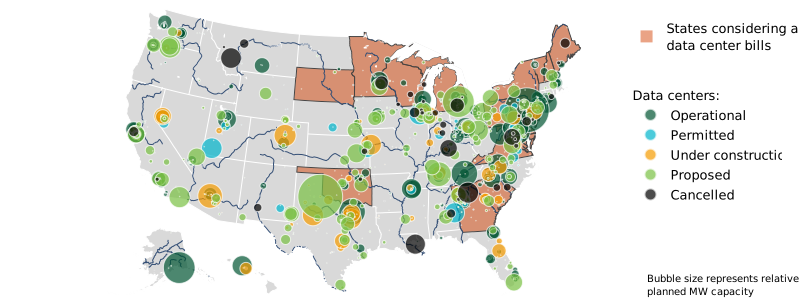
Local opposition to the data center buildout has increasingly emerged as a bipartisan issue (Figure 3).
Figure 3: Opposition to local data center construction has become a midterm hot topic6

New York issued an executive order in July pausing certain environmental permits for large-scale data centers pending further review.
For investors, the risk is that governments and utilities commit capital before securing associated revenues. Public opposition can delay or derail development, so revenue forecasts should distinguish between operating facilities, projects backed by contractual commitments and speculative proposals. We believe investors should also assess contractual commitments for enforceability and protection against cancellation.
Figure 4: The data center buildout is clashing with popular opposition7
In our view, the municipal and public utility credit implications depend less on the size of investment and more on development terms.
Data centers can require substantial supporting infrastructure spending and pressure electricity and water supplies. Public power and water systems may need to expand capacity. As with data centers, they can incur costs before realizing revenues, dependent on timing of construction and the nature of customer-assumed obligations.
In our view, better-positioned governments and utilities will seek to protect taxpayers and customers. This would mean avoiding letting fiscal benefits become absorbed by tax incentives or letting the public sector bear the cost of any unused infrastructure. The benefit may be more durable where data centers contribute to infrastructure investment and are responsible for costs if plans change.
This can leave minimum-payment commitments, dedicated tariffs, upfront contributions and termination provisions particularly important to our analysis, and we assess them against capital committed and the financial counterparty strength. Permitting delays, rent credits and tenant termination rights can weaken transactions and call into question demand assumptions. Utilities that phase spending and secure enforceable commitments will likely be best positioned8.
Conclusion: policy decisions may deliver municipal credit opportunities
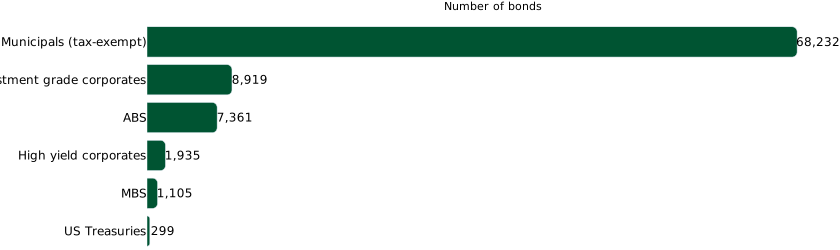
The municipal market includes a wide range of issuers and bond structures (Figure 4). As a result, the same policy change can have materially different effects across credits. We believe understanding those differences requires analysis of the revenues supporting the bonds, the issuer's financial resources and the decisions available to its governing body.
Figure 5: The municipal bond market is highly fragmented9
Changes in political control, tax policy, and data center development can affect both fiscal flexibility and spending demands. We see the strongest investment case in issuers with the financial resources and most credible plans to manage these changes. Identifying them requires looking beyond election headlines to how policy decisions impact revenues, costs and the security supporting each bond.
Insight’s team offers specialist municipal capabilitiesOur heritage of municipal bond investing dates back to 1933. Our large team of dedicated portfolio managers, specialist research analysts, and traders has successfully navigated multiple market and business cycles. We manage a highly diverse range of strategies designed to meet different risk preferences. Our strategies are characterized by disciplined bottom-up investing. Our municipal bond specialists work closely on pinpointing market inefficiencies and opportunities together, particularly in the revenue bond universe. We seek to remove or minimize exposure to unwanted, or potentially unrewarded sources of risk, such as by managing interest rate exposure through overlays. |


