Incoming data continue to point to an environment where growth is improving but remains below par, supported by resilience in manufacturing. The backdrop is reinforced by strength in corporate earnings and underlying company fundamentals, as was evident during the latest reporting season. However, the balance of risks is still uneven in our view. It suggests some moderation ahead, particularly if the Middle East ceasefires and initial peace agreements fail to hold sufficiently provoking renewed uncertainty and volatility in investor sentiment. Inflation remains above-target and is rising in some areas. The data continue to show a clearer transmission from energy and geopolitical pressures, and the near-term outlook suggests this pressure is likely to persist while the oil shock remains in place. The impact is expected to be most acute in Europe and Asia, where larger energy importers appear more exposed to further cost pressures. This is reflected in rising input and output costs, alongside longer supplier delivery times. Under both the base and alternative cases, inflation remains in an above-target and rising regime, with energy effects continuing to feed through in the near term.


14 April 2026
Fixed income
Our quarterly review and outlook provides a summary of key market changes before offering a more detailed look at our global and regional economic views, as well as our views on specific asset classes including investment grade and high yield debt, emerging market debt, secured finance, municipal bonds and currencies.
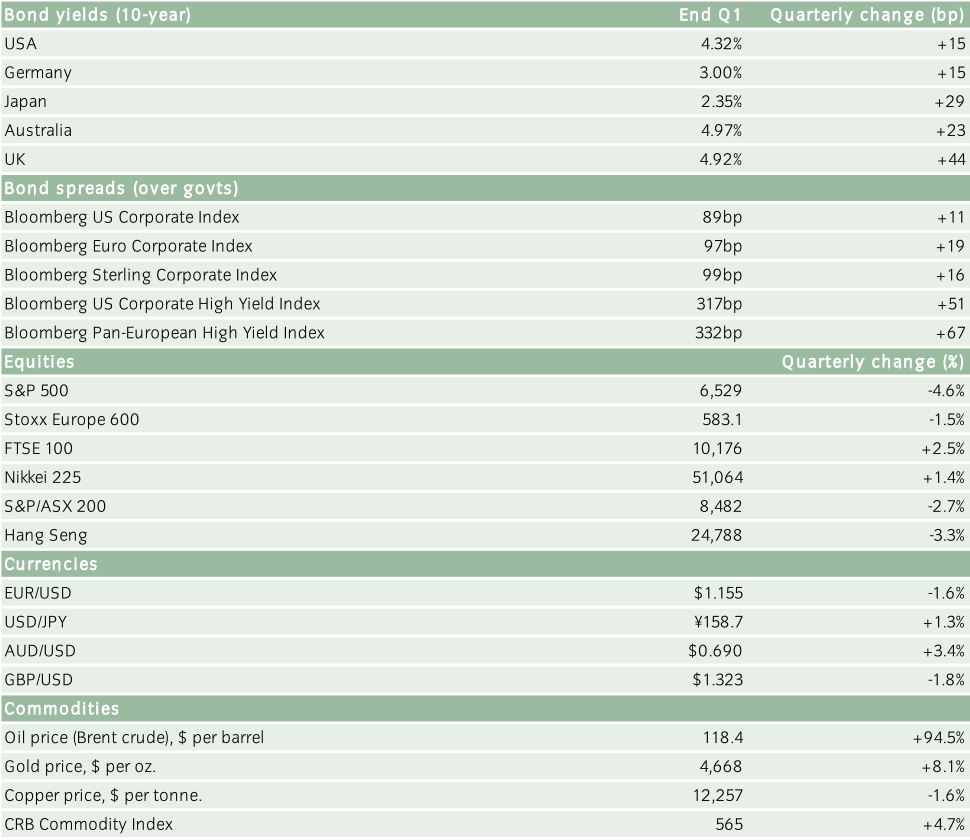
Source: Bloomberg. As at 31 March 2026.
| READ THE FULL OUTLOOK HERE |
Economic outlook
Asset class outlook

Read our full update here.
221 kb