
| “There is no longer any ultra-long (30-years plus) issuance coming into the market from the BoE, whereas the Bank was previously selling around £2bn per annum.” |  |
Reworking the balance sheet reduction plan
At its 17 September 2026 meeting, the Bank of England (BoE) announced that it would be replacing annual reviews of its Asset Purchase Facility (APF) with a defined, multi-year plan to reduce its remaining £488bn gilt portfolio to zero by 20341.
The announced framework introduces several key changes:
- Shorter-maturity issues will be held to maturity: £222bn of gilts with a maturity before 2035 will be held to maturity and allowed to naturally roll off.
- Medium-term issues will be gradually sold: After a six-month pause, £146bn of gilts maturing between 2035 and 2049 will be sold to the government at a rate of £20bn per annum, starting in April 2027. Sales will be preannounced and executed at a market price.
- Longer-term issues will be held to indirectly back banknotes: £120bn of bonds with a maturity of 2049 and beyond will be held permanently on the BoE’s balance sheet to serve a new framework that will indirectly back the issuance of physical banknotes.
In combination, this will see the bank reduce its balance sheet by around £46bn per annum, significantly below the average reduction of £89bn per year seen over the previous four years. There is also a significant shift with only £20bn to come from active sales, while the remainder will occur passively as bonds hit their maturity dates.
Assessing the implications
Market perspective
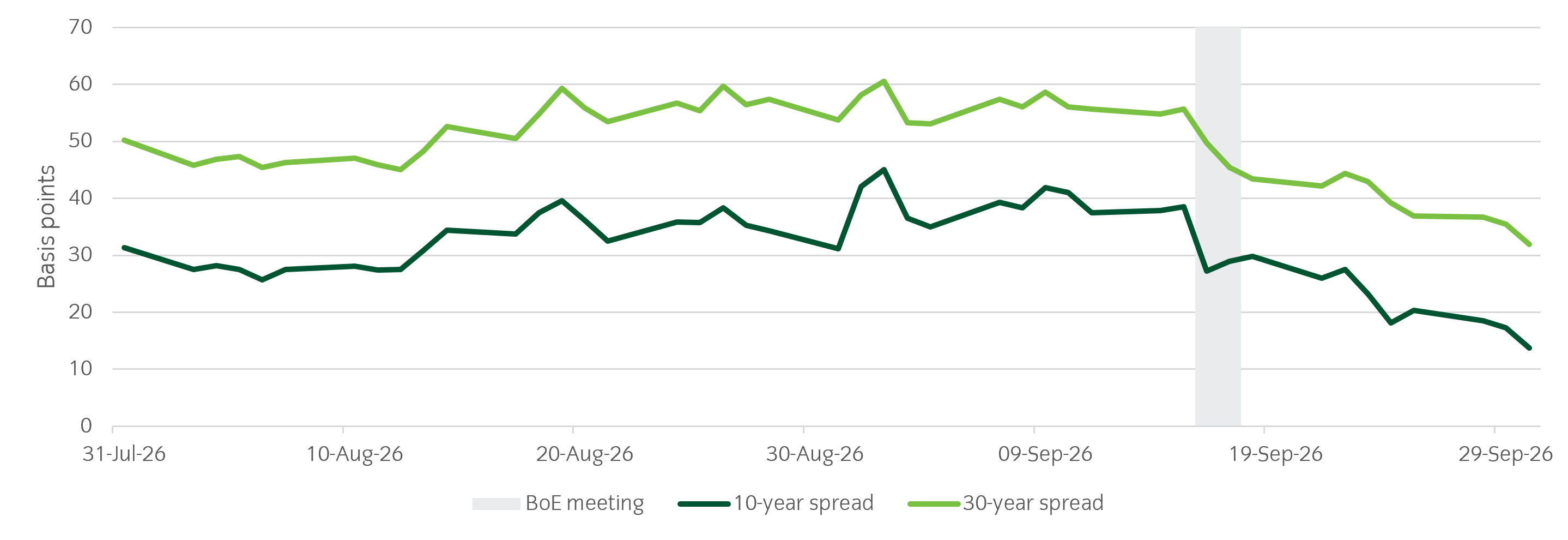
- Markets reacted positively to the announcement. Gilts underperformed running up to the meeting, then outperformed after (see Figure 1).
Figure 1: The spread of UK gilt yields over US Treasury yields narrowed after the meeting2
- Supply until April 2027 is reduced by around £10bn versus previous expectations. There is no longer any ultra-long (30-years plus) issuance coming into the market from the BoE, whereas the Bank was previously selling around £2bn per annum.
- This gives the Debt Management Office (DMO) greater flexibility regarding refinancing. The DMO could retire the £20bn of gilts sold to it by the APF and then refinance via aggregate issuance into whatever maturities it believes are optimal, along with the refinancing of maturing gilts held on the BoE’s balance sheet. It is possible that the bank may choose to expand its bills issuance as part of this process. The DMO could also choose to resell the gilts into the market or hold them on its balance sheet until maturity.
- This is likely to have a marginal impact on indices. This is because some gilt sizes may decline, and the DMO is likely to refinance the debt in shorter maturities in initial years, marginally shortening index duration.
Political perspective
- The BoE has been keen to stress that this change has been under review for a considerable period and was not a response to political pressure arising from higher gilt yields. Nevertheless, it is difficult to view the decision in isolation from the broader trend of increasing political pressure on central banks globally.
- We believe the Budget on 28 October will likely be the next challenge for gilt markets. However, we expect this to show continuing long-term fiscal consolidation, at odds with other high-deficit countries such as France and the US.
We still think gilts offer value
We believe gilts offer value relative to other major bond markets, and the BoE’s decision to reduce its balance sheet in a more market-friendly way reinforces this view.
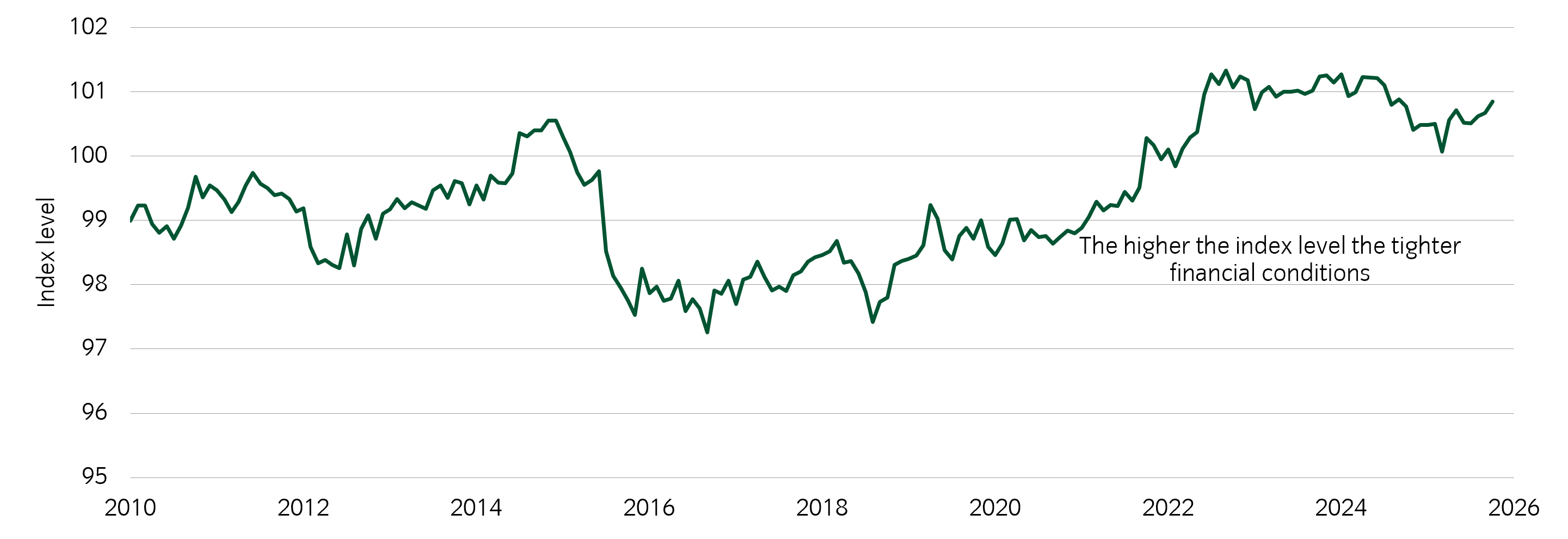
Markets are pricing a series of interest rate rises into the UK yield curve and, although we can see the BoE edging rates upwards, we believe markets have become overly optimistic about the extent of the rate-hiking cycle. Financial conditions – in other words, how supportive or restrictive broader financial markets are for growth – are becoming more restrictive, effectively doing the BoE’s job for it (see Figure 2) – and this pressure is likely to intensify as thousands of households with five-year fixed-rate mortgages secured during the pandemic will come to the end of their deals over the coming year, and refinance at significantly higher rates.
Figure 2: Financial conditions have started to tighten even before any rate rises3